Blog post
Why Heatwaves Don't End When The Heat Goes Away

Eli Atkinson
August 24, 2026
As people continue to move from rural to urban areas, seeking higher quality employment and education, our cities need to expand. Given the fact that building on flat land is easier and cheaper than on hills, many new housing developments are being built on nearby flood plains, despite the increased flood risk of living in these areas. At the same time our global temperature continues to rise as a result of CO2 output, interrupting the Earth’s delicately balanced water cycle and weather patterns, increasing the likelihood and severity of extreme weather events. These two each play their own roles in contributing to making our land impermeable to rainfall, the former by the spread of paved surfaces, and the latter by drying out the remaining soil through drought.
So, how do each of these create dry soil conditions, and why does this create conditions ideal for flooding?
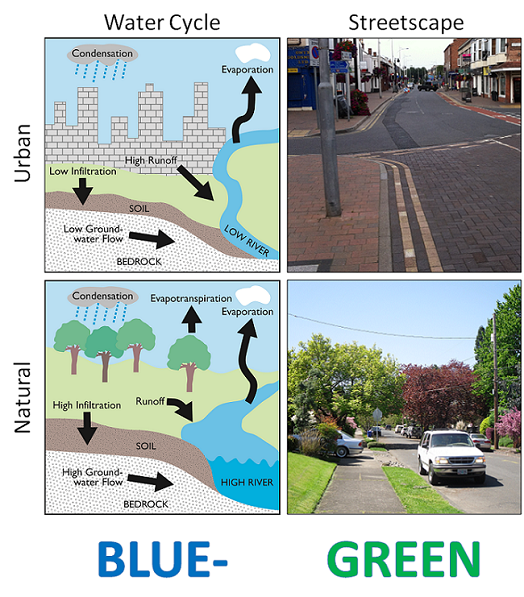
Urbanisation, the shift from people living primarily in the countryside to towns and cities, propels urban growth: the spread of cities.1 When a city expands, deforestation makes way for impermeable surfaces like concrete and asphalt to replace permeable surfaces like soil, gravel, and sand. These hard surfaces replace the slow gradual movement of rainwater through the ground back into rivers with quick surface runoff, resulting in higher river levels that are more prone to flooding.1 Additionally, by removing plant life, flood risk increases because there are fewer plants to intercept and slow the water as it moves from rain to river.
A similar effect happens with the introduction of drainage systems, where rainwater is returned to the river much faster than if it had to move through soil;1 this is fine during normal conditions, but becomes dangerous during heavy rainfall.
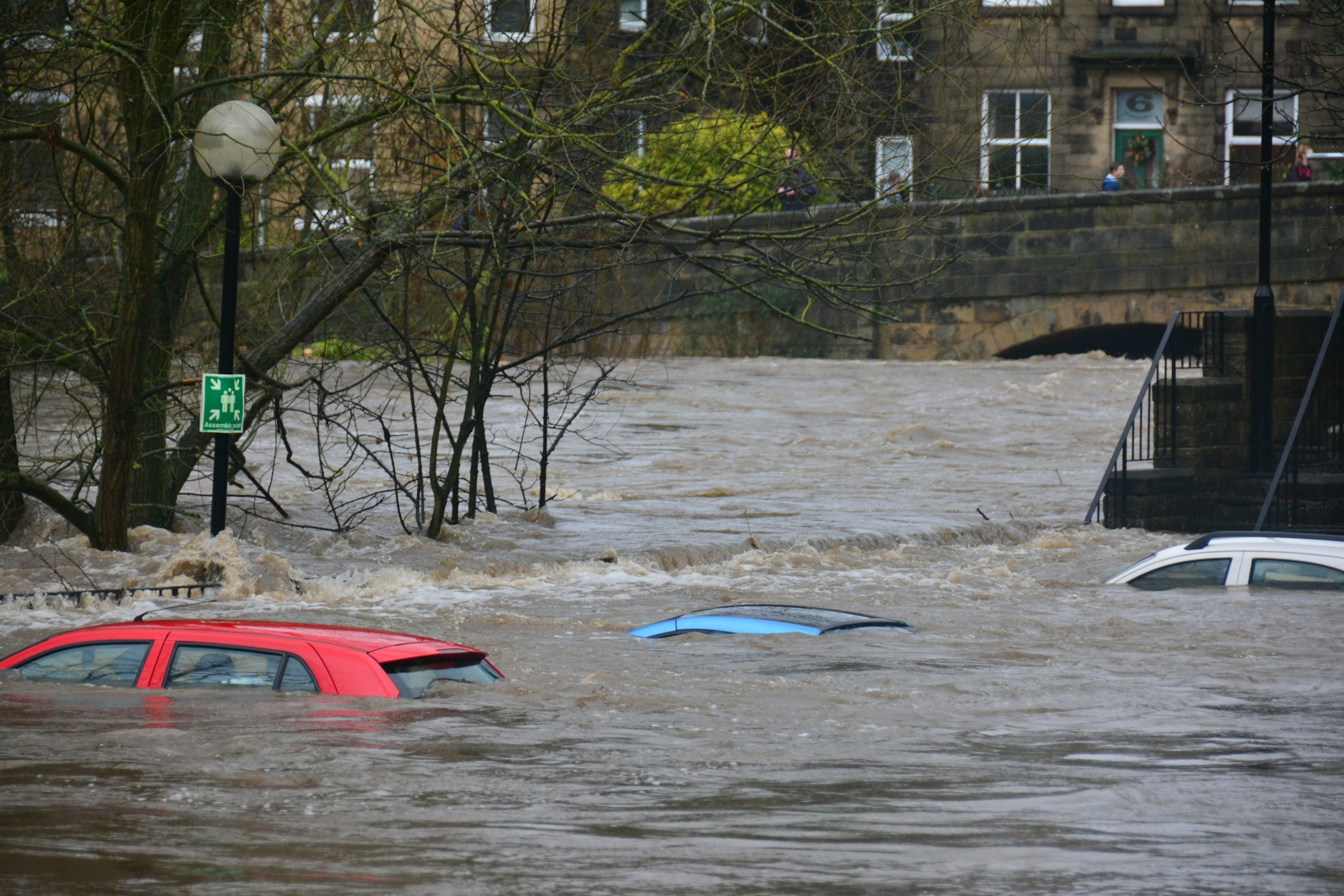
According to Flood Risk America, a drought is ‘a prolonged period of deficient rainfall’ creating dry soil, low water levels, and stress on vegetation and plants.3 When thunderstorms hit drought-dried soil, the land isn’t in a position to appropriately absorb the water, leading to flash flooding.
The UK’s Environment Agency declared in July that half of England was in drought.4 Similar to how flash floods occur and develop rapidly, this ‘flash drought’ is, according to a Guardian article, ‘because of unusually low rainfall and high temperatures’.4 However, this phrasing ignores the obvious that this summer’s extreme weather was a direct result of human-influenced climate change. Check out our last blog for more about how we talk about climate change.
These drought conditions disrupt the soil in two distinct ways:
That is, if the rainwater even reaches the dry, cracked soil in the first place. This year, every country in the United Kingdom saw at least one wildfire, with some seeing multiple, as a direct consequence of our warming world. Wildfires strip vast amounts of land of vegetation, and coat the land in a layer of soot and ash. This layer of ash is even less permeable than the parched soil below, exacerbating the issue of surface runoff.3
Dry conditions and other extreme heat events are only likely to become more frequent with our (corporations’) current climate behaviours, and it follows that the same can be said for floods. At what point do we admit that global warming isn’t something that only affects other countries?
So, both urbanisation and global warming are responsible for the dry weather conditions that leave land susceptible to flash floods. Urbanisation might feel very man-made as a cause of drought, whereas climate change might feel more natural, but in reality climate change is just as human as urbanisation being a cause of flood conditions.
This wasn’t the summer of ‘76, it was the result of decades of warning from climate scientists, and decades of inaction from policy makers and politicians.
It may not be ‘the coldest summer of the rest of your life’ (despite being an admittedly powerful slogan) as there is still significant variation in each year’s hottest temperatures,5 but it certainly could be one of them without climate action.